How Is the US LP Market Organized in 2026? For Non-U.S. Fund Managers
Last reviewed: 21 September 2026
8 min read
Last reviewed: 9 August 2026
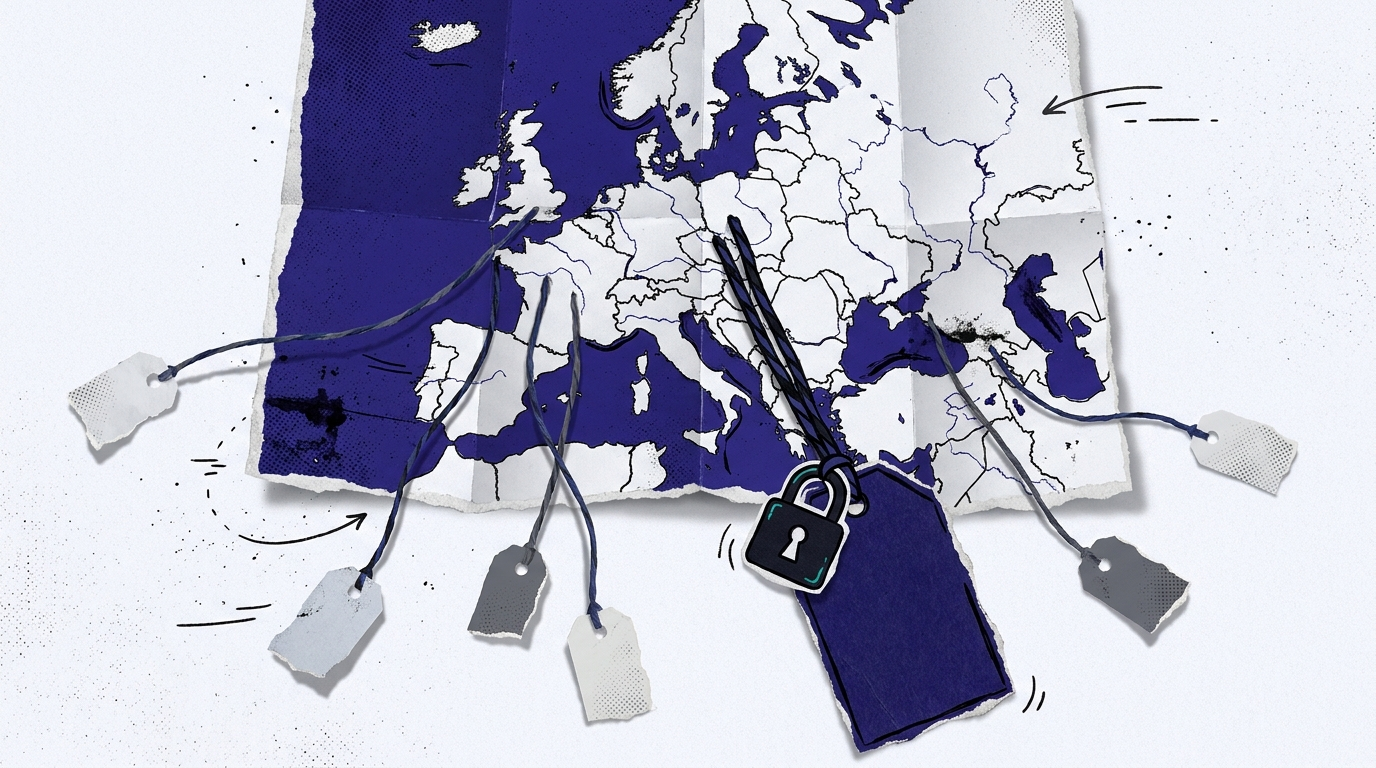
NPPR registration costs range from zero (Netherlands, Ireland) to roughly €2,650 plus €3,000 per year (Luxembourg), with Germany near €1,641 plus a depositary-lite appointment. Timelines run from same-day filing (Netherlands, Luxembourg) to two months (Germany, Sweden). The U.K.'s equivalent costs £280 and permits marketing on submission. Figures as of 9 August 2026.
Educational content — not legal advice. Full note at the end of this article.
If you have searched for this table before, you know why this page exists. The two published sources that ever collected NPPR fees and timelines in one place date from 2016 and 2024, and neither reflects the AIFMD II changes that took effect on 16 April 2026. Law firms will tell you the fees "vary by member state." That is true, and it is also not an answer. Here is the answer, with the date we verified each part of it.
One framing note before the numbers. A national private placement regime (NPPR) filing is how a non-EU fund manager — a U.S. GP with a Delaware or Cayman fund, say — gets permission to market that fund to professional investors in one EU country. There is no EU-wide registration for non-EU managers. Every country is its own filing, its own fee, and its own clock.
The table covers the seven EU jurisdictions realistically open to non-EU managers, plus the U.K. for comparison. Regulator fees only — legal counsel is additional (and usually the larger number). Figures verified against regulator sources and dated practitioner guides from 2024–2026; confirm with the regulator before budgeting.
| Country | Regulator | Model | Initial fee | Annual fee | Realistic timeline | Depositary required? | The thing that catches people |
|---|---|---|---|---|---|---|---|
| Netherlands | AFM | Notification | None | None | Market on complete filing | No | SEC "covered entity" attestation; SFDR disclosures apply |
| Ireland | CBI | Notification + confirmation | None | None | ~2–4 weeks | No | Reporting obligations start on filing — even if you never market |
| Luxembourg | CSSF | Notification (file before marketing) | ~€2,650 per fund | ~€3,000 per fund | Effectively immediate | No | The annual fee runs as long as any Luxembourg investor remains in the fund |
| Sweden | Finansinspektionen | Approval | ~SEK 15,000 (~€1,400) | None | Up to 60 days | No | Full application pack; cannot be added late to a roadshow |
| Finland | FIN-FSA | Approval | ~€2,900 | None | ~3–6 weeks | No | Article 23 disclosures must sit inside the PPM itself |
| Germany | BaFin | Approval (§330 KAGB) | ~€1,641 per fund | Modest annual fee | 2 months (professional investors) | Yes — depositary-lite | Audited annual report due to BaFin within 6 months of year-end |
| Denmark | Finanstilsynet | Approval | None | ~€650 per fund | 4–8 weeks; tail beyond 12 | Yes — EU depositary | SEC/MoU coverage confirmation sits on the critical path |
| U.K. | FCA | Notification | £280 per fund | Periodic fees apply | Market as soon as filed | No | Financial-promotion rules are a separate, second gate |
Fees and timelines as of 9 August 2026; fee figures rest partly on 2024 practitioner data where regulators do not publish amounts — treat as order-of-magnitude and verify before budgeting.
And the four large markets that are not in the table, because you cannot realistically use them:
The regulator fee is the smallest line in the budget. Four other items belong in it:
Legal counsel, per country. The filings look simple; the conditions underneath them are not. Counsel scoped to your actual target states typically costs several multiples of the regulator fees. It is also where the money is best spent — the expensive mistakes in this area are sequencing mistakes (marketing before filing, pre-marketing without notifying), not form-filling mistakes.
Depositary-lite services, where required. Germany and Denmark both require the appointment of a depositary performing cash-flow monitoring, safekeeping, and oversight duties. This is a real service with a real annual cost and — more importantly for your timetable — a real onboarding lead time. Engage the depositary before you start Germany's two-month clock, not during it.
Reporting. Every NPPR registration carries Annex IV regulatory reporting to that country's regulator, typically half-yearly or quarterly depending on your size. The cost is mostly internal time or a fund-administration fee, and it continues for as long as investors from that country remain in your fund — which for a ten-year closed-end fund means the reporting outlives the fundraise by most of a decade.
Translation — mostly not. A pleasant surprise: Germany accepts filing documents in English under §330(4) KAGB, contrary to what some older guides claim. Most open jurisdictions work in English.
Three speed bands, and they should drive your sequencing:
File and go: the Netherlands and Luxembourg. The AFM permits marketing as soon as a complete notification is sent — its own guidance says so — and charges nothing. The CSSF requires the information form before marketing begins, with no stated waiting period. These are the registrations you can do the same week you decide to do them. The Dutch catch is upstream: a U.S. manager needs confirmation from the SEC that it is a "covered entity" under the AFM's cooperation arrangement, and that request is on the SEC's timetable, not yours.
Confirmation and short approval: Ireland and Finland. Ireland is a notification but marketing waits for the Central Bank's confirmation — typically two to four weeks. Finland runs a genuine approval in roughly three to six weeks, and requires the AIFMD Article 23 investor disclosures to be built into the PPM itself, so if Finland is on your list, build them in before you circulate the document.
Real approval gates: Sweden, Germany, Denmark. Sweden allows itself up to 60 days. Germany's statutory review is two months for marketing to professional investors (longer for semi-professional access or feeder structures). Denmark is typically four to eight weeks but can run past twelve — and Denmark's file needs a confirmation from the SEC that you and your fund are covered by the SEC–Danish FSA memorandum of understanding. That letter depends on a third party, which is why Denmark should be started first even though it will finish last.
The planning rule that falls out of this: decide your country list before you plan your first trip, and file the slow countries first. A manager who starts outreach and then discovers Germany takes two months has burned exactly the sequencing that the reverse-solicitation rules punish.
Two traps are worth naming because they invert the headline numbers:
Luxembourg's "cheap" filing is a fund-life subscription. The ~€3,000 annual fee — and the Annex IV reporting behind it — continues for as long as any Luxembourg investor remains in the fund, including after you stop marketing and after the fund closes to new investors. One Luxembourg LP in a ten-year fund means roughly US$30,000 of fees over the fund's life. Budget it as a cost of the investor, not of the fundraise.
Ireland's "free" filing starts a meter. The Central Bank's position is that reporting obligations attach when the notification is made — whether or not you ever actually market. Filing Ireland "just in case," because it costs nothing, is how managers acquire a standing quarterly obligation with no pipeline to show for it. File it when Ireland is really on the roadmap.
Sweden and Finland, by contrast, charge nothing annually — once you are in, staying registered is cheap. And everywhere, de-registering has its own consequence: in countries that extended the EU's de-notification rules to non-EU managers (Germany among them), pulling a fund's registration triggers a 36-month ban on pre-marketing similar strategies there. Many managers leave dormant registrations open for exactly this reason. Whether that is worth it depends on which country — dormancy is free in Sweden and costly in Luxembourg.
One notification to the FCA through its Connect portal, £280 per fund, and marketing may begin as soon as the complete notification is sent. No approval wait, no depositary requirement, and no 18-month pre-marketing lockout, because the U.K. did not adopt the EU's pre-marketing regime.
The catch is different in kind: the U.K.'s financial-promotion rules (section 21 of FSMA) govern the content of every approach to U.K. investors and apply regardless of the NPPR filing. Most institutional outreach fits within the "investment professionals" exemption, but the exemption attaches to each communication, not to the manager. The U.K. is the easiest registration in Europe and not a compliance-free zone — a distinction covered in our separate U.K. guide.
Honestly: rarely, on cost grounds. The entire seven-country open map — every fee in the table above, first year — comes to less than a single mid-tier conference sponsorship. Cost is not the real gate.
The real gate is investor demand per country. Each registration adds an ongoing reporting obligation, so the discipline is to register where your target LPs actually are, not everywhere you might someday meet one. Market practice says most managers conclude the same: very few funds are ever registered in more than three member states. And at the other end of the scale, practitioners generally put the threshold for building EU fund structures instead of using NPPRs at somewhere around US$100 million or more of expected European commitments — below that, the country-by-country route is the economic answer.
For the forms, often not. For the decision, yes — and this is not the standard lawyer-adjacent hedge. The forms are the visible 10% of the problem. The invisible 90% is: whether your fund's domicile still clears the Article 42 eligibility conditions that changed in April 2026 (they are now list-dependent and can change under you); whether the country you are about to enter applies the 18-month pre-marketing rule to non-EU managers; and what your own website and conference calendar have already done to your reverse-solicitation position. Those are questions counsel answers per jurisdiction — and questions this article is deliberately not advice on.
The Netherlands and Ireland charge no regulator fee. The Netherlands also permits marketing immediately on a complete filing.
About €1,641 per fund at registration plus a modest annual fee — and, the larger cost, a mandatory depositary-lite appointment and an audited annual report filed with BaFin within six months of year-end. Figures rest on 2024 sources; verify current amounts.
The statutory review period is two months for marketing to professional investors, and longer for semi-professional access or feeder structures.
In some states — Luxembourg about €3,000 per fund per year (which continues while any Luxembourg investor remains), Denmark about €650, Germany a modest annual fee. Sweden and Finland charge none.
No — every country is a separate filing with separate fees and separate ongoing obligations. There is no EU-wide registration for non-EU managers.
£280 per fund, with marketing permitted as soon as the complete notification is sent to the FCA.
Reporting. Annex IV obligations attach per country and continue while investors remain in the fund — long after fundraising ends.
The spreadsheet answer is that Europe costs less to enter than one conference sponsorship. The harder line item is knowing which of those countries holds institutions that actually allocate to your strategy — that's the question we exist to answer.
Educational content only. This article was researched and drafted with AI assistance, reviewed for accuracy before publication. This article explains publicly available regulation for general information, current as of the "Last reviewed" date shown above. It is not legal, tax, or compliance advice, and no reader should act on it without engaging qualified EU counsel for the jurisdictions in question. Private Capital Development LLC is not a law firm, and is not a placement agent or broker-dealer; we do not conduct regulated fund distribution in the European Union. We connect fund managers and institutional investors through relationship facilitation on a flat-fee retainer.
About Randy Mitchell. Randy Mitchell spent 13 years (2001–2014) with the U.S. Department of Commerce's International Trade Administration, and has organized more than 150 GP/LP introductory sessions across 45 cities on six continents. Private Capital Development LLC introduces fund managers to institutional investors globally on a flat-fee retainer — it is not a placement agent and does not distribute funds. Our customers make these budgeting decisions every quarter; this table exists because we could not find one to hand them.
If European investors are on your roadmap: our Concierge program provides ongoing one-to-one introductions of managers to institutional investors on a flat monthly retainer — the relationship side of the problem, while your counsel handles the regulatory side. Non-U.S. managers raising into the United States face this same wall in mirror image; that is what CapitalConnect is for.
Change log — 9 August 2026: first publication. All figures verified against the sources listed in our research record as of this date.

Last reviewed: 21 September 2026
Which Latin American countries have a private equity or venture capital association? Eleven associations, across eleven countries and territories....