How Is the US LP Market Organized in 2026? For Non-U.S. Fund Managers
Last reviewed: 21 September 2026
9 min read
Last reviewed: 9 August 2026
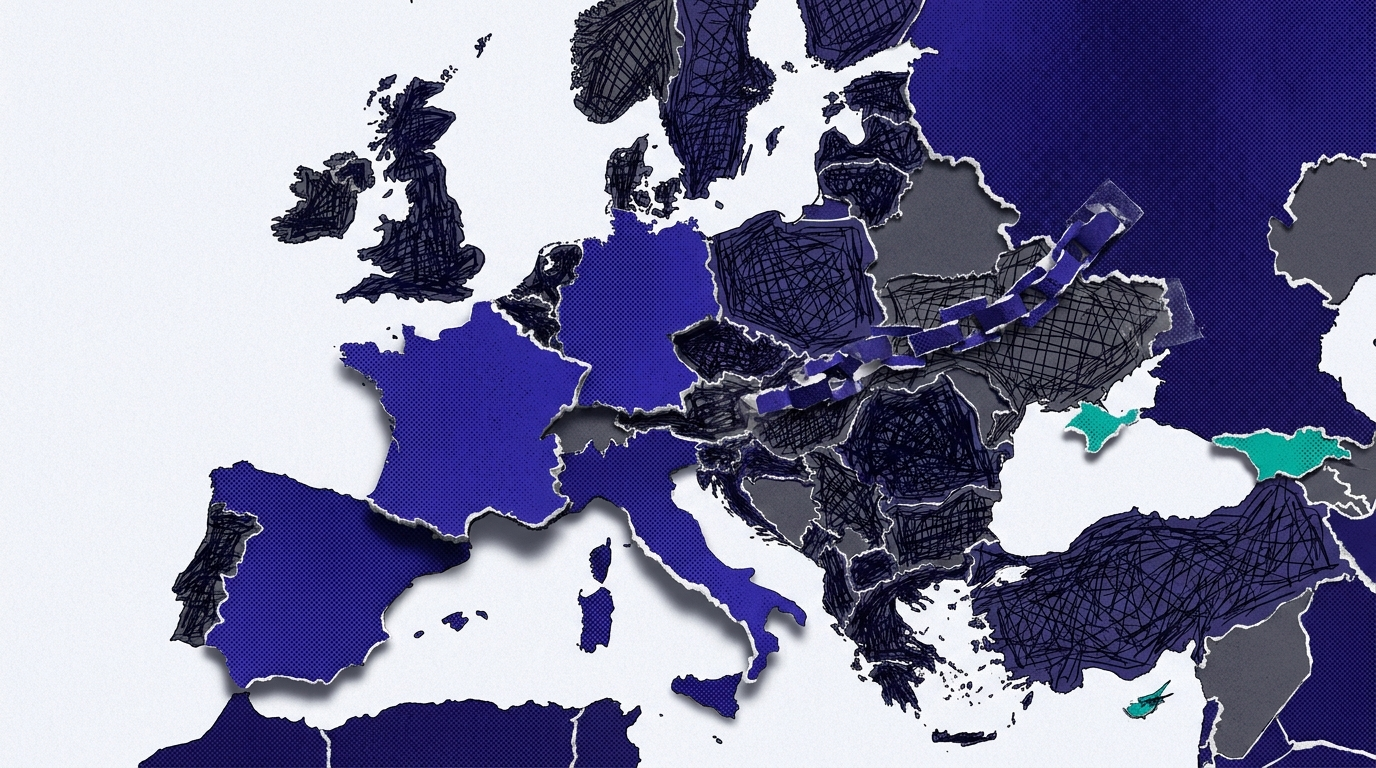
Of the EU's major fund markets, seven are realistically open to non-EU managers: the Netherlands, Ireland, Luxembourg, Sweden, Finland, Germany, and Denmark. France, Austria, and Spain are effectively closed by conditions non-EU managers cannot meet in practice, and Italy has no private placement regime at all.
Educational content — not legal advice. Full note at the end of this article.
Ask most advisers which European countries a U.S. or Asian fund manager can market in, and you will get a version of "it varies by member state." That is true and useless. The question a manager actually needs answered before booking a roadshow is binary: where can I file, and where am I wasting my time?
The honest answer is that the EU's twenty-seven member states sort into four groups, and only one of them matters for planning. What follows is the verdict map, then the specific reason each closed market is closed — because "France is difficult" and "Austria is impossible" are different facts with different consequences, and knowing which is which changes what you do about it.
| Band | Countries | What it means in practice |
|---|---|---|
| Open — file and go | Netherlands, Ireland, Luxembourg | Notification-based. Marketing begins immediately or within weeks. No or low regulator fees. |
| Open — approval with lead time | Sweden, Finland | Genuine approval gates of roughly three weeks to two months. Cannot be added late to a roadshow. |
| Open — approval plus a depositary | Germany, Denmark | Same approval gates, plus a mandatory depositary appointment that carries its own cost and onboarding lead time. |
| Effectively closed | France, Austria, Spain | A route exists on paper; its conditions cannot be satisfied in practice by a typical non-EU manager. |
| Closed — no regime at all | Italy, plus several smaller markets | No private placement route exists. Reverse solicitation only, with no registration fallback. |
| Unproven — worth a counsel call | Belgium | A genuine route most guides overlook, but with prior authorization and an unpublished timeline. |
Verdict map as of 9 August 2026. Fees, timelines, and depositary details for the open markets are in our costs and timelines guide.
Seven open markets out of twenty-seven sounds punishing until you look at where European institutional capital actually sits. The Nordics, the Benelux, Germany, and Ireland — plus the U.K., which is a separate regime — account for the overwhelming majority of the allocators a non-EU manager would want to meet. The regulatory map and the money map overlap far better than the country count suggests.
Italy is the clearest verdict in Europe, and it comes from the regulator itself. CONSOB states that the Italian legal framework does not provide a private placement regime for the marketing in Italy of non-EU funds, or of EU funds managed by a non-EU manager.
This was a deliberate choice, not an oversight. Italy previously had a private placement route — non-Italian managers could market to Italian investors subject to Bank of Italy authorization — and cancelled it when transposing AIFMD. The provisions that would allow non-EU managers in are written into Italian law, but they are switched off: they take effect only when the EU activates the third-country passport, which has not happened and is not in progress.
What this means for a manager with Italian institutions on the target list: there is no filing to make. The only route to an Italian investor is a genuinely unsolicited approach — and because no registration regime exists, there is no way to regularize a misstep after the fact. In an open market, a manager who marketed prematurely can file and move on. In Italy there is nothing to file. That asymmetry argues for the most conservative posture in Europe: no proactive contact, documented investor-initiated approaches only, and Italian counsel on anything borderline.
One watch item. Italy transposed AIFMD II in March 2026, and its regulators owe secondary implementing measures by 16 October 2026. Whether those measures touch non-EU access is unknown — but it is the only near-term event on the continent that could change a "closed" verdict on this list. We re-check it on that date.
France has a route. Article L.214-24-1 of the Monetary and Financial Code requires a non-EU manager to notify the AMF before marketing to professional clients, and the AMF's own rulebook converts that into an application for prior authorization. The AMF's published summary confirms it: marketing without a passport requires prior authorization.
The problem is what the authorization requires. Rather than applying Article 42's baseline conditions, France set the bar at the standard used for EU managers marketing non-EU funds — meaning the non-EU manager must comply with the French rules applicable to authorized portfolio management companies, plus ensure the depositary functions are performed and identify the custodian to the AMF. In substance, France asks a non-EU manager to look like a fully compliant EU manager.
Practitioner assessments have been consistent for over a decade: the conditions exceed what Article 42 contemplates, and the authorization is very difficult to obtain in practice. The widely shared conclusion is that the only route clearly open to non-EU managers in France is reverse solicitation — under an interpretation that is the strictest in Europe, where even a conference invitation counts as prior solicitation.
Two further layers apply on top: France's rules on financial canvassing (démarchage) and its rules on providing investment services both bite independently of the fund-marketing analysis. The status of the canvassing regime as applied to professional-investor private-fund solicitation in 2026 is something we could not verify to a primary source — treat it as a question for French counsel, not an assumption.
One narrow opening worth knowing about. Practitioner sources describe a limited exemption permitting non-EU sponsors to market to French fund-of-funds clients without complying with the full requirements. It is fact-specific and requires case-by-case French legal review — but if French institutions genuinely matter to your raise, that is the thread to pull rather than the authorization route.
Austria is the most instructive entry on the list, because it fails for a reason no amount of budget can fix.
Austria did implement Article 42 — §47 of its AIFM Act is a real regime with a real filing address. But the notification must include a confirmation from the competent authorities of the manager's home state that the fund and the manager fulfil all requirements laid down in the Austrian Act, in AIFMD, and in the delegated acts adopted under it (with one narrow carve-out).
Read that as a U.S. manager: the SEC would have to certify that you comply with a European directive. The SEC does not issue such certifications. This is not a cost problem or a paperwork burden — it is a documentary impossibility, and it is why practitioners describe Austria as prohibitively challenging or simply unavailable, notwithstanding that the statute exists.
Austria layers a second requirement that would be onerous even without the first: a non-EU manager must appoint a legal representative established in Austria, who represents the manager in and out of court, serves as the agent for service of process and the contact point for Austrian investors and the regulator, and — unusually — performs the compliance function jointly with the manager. The statute states that these powers cannot be limited.
For completeness: a §47 notification reaches professional investors only, with a separate notification required to reach Austria's "qualified retail investor" category (which itself requires the investor to hold unencumbered assets above €250,000, commit at least €10,000, and confirm the risks in writing, with a leverage cap on the fund). Breaching the marketing rules is an administrative offense carrying penalties up to €100,000, and the regulator may publicly name the manager and fund. Austria is a jurisdiction to stay out of deliberately, not to approach opportunistically.
Spain sits close to Austria, for related reasons.
The CNMV's published statement of national marketing requirements is explicit that marketing of funds managed by a non-EU manager is subject to prior authorization from the CNMV. There is no private placement carve-out: prior authorization (or a passport, where available) is required to market in Spain regardless of whether the offer goes to professional or retail investors.
The conditions are where it becomes impractical. The CNMV may require a legal opinion from an independent expert confirming compliance with all requirements — and, critically, a confirmation from the home supervisor that Spanish funds receive equivalent treatment in that country. That second element is a reciprocity test, and like Austria's certification requirement, it asks a foreign regulator to produce a document it has no process for producing.
Spain also requires a local representative before the CNMV for statistical purposes, and marketing entities must file quarterly statistical statements. Fee figures in circulation (roughly €2,600 on registration plus €3,100 annually) appear in the context of passport notifications rather than third-country authorizations — treat them as indicative only. Contemporary practitioner commentary has consistently described the CNMV as applying these requirements very restrictively.
One current complication: as of 9 August 2026 Spain had not transposed AIFMD II, and is subject to a European Commission letter of formal notice that references the possibility of financial sanctions. A jurisdiction that is both effectively closed and legally in flux is not one to build a timetable around.
Belgium is the entry most guides omit, and it deserves a paragraph because the omission is wrong.
Belgium does operate an Article 42 route — Articles 497 to 499 of its 2014 law on alternative investment funds, with the procedural detail in an FSMA communication and filings made to a dedicated notification address. The route is real and available for each third-country fund a manager wishes to market.
Two honest caveats. First, the sources conflict on whether it is a notification or an approval. The FSMA's own materials and ESMA's consolidated publication of national marketing requirements both indicate that prior authorization from the FSMA is required; at least one major law firm's guide states that a notification suffices for private placement, with approval needed only for a public offering. We weight the regulators over the secondary source: assume prior authorization. Second, no processing timeline is published, and the FSMA has historically issued no guidance on what constitutes "marketing" — which is precisely the kind of silence that argues for the conservative reading.
Add that Belgium had adopted its AIFMD II implementing law in July 2026 but had not yet published it officially as of 9 August 2026, and the sensible posture is: if Belgian allocators genuinely matter to your raise, this is worth a call with Belgian counsel rather than a line in your plan.
Several EU member states report no private placement regime, which makes them closed in the same absolute sense as Italy.
Here the published sources disagree, and it is worth being precise about how. The EU securities regulator's most recent report on national marketing requirements lists the authorities that reported having a private placement regime. Cross-referencing that list against the EU-27 leaves Bulgaria, Italy, Latvia, Lithuania, Poland, Romania, Slovakia, and Slovenia unaccounted for. A widely cited law-firm guide, however, names only five states as having no regime — Bulgaria, Italy, Latvia, Poland, and Slovenia — which appears to count the regulator's list without separating the three non-EU EEA states included in it.
The defensible reading: the five states both sources agree on are confirmed closed, and Lithuania, Romania, and Slovakia are absent from the regulator's list and should be treated as closed absent specific local advice. Note also that our conclusion rests on absence from a list, which is an inference rather than an affirmative regulator statement — a distinction that matters if one of these markets is commercially important to you.
One upside that the EU-only framing hides: AIFMD applies across the wider European Economic Area, and Norway, Iceland, and Liechtenstein all operate private placement regimes. Norway in particular is a real market with a modest fee and a one-to-three-month timeline. If your target list includes Nordic institutions, the map is wider than "the EU" suggests.
Start with demand, not with regimes.
The instinct is to work down the map registering wherever registration is possible. That is backwards, because every registration creates a standing reporting obligation that outlives your fundraise — obligations track investors, not campaigns, so a filing made "just in case" can generate years of reporting for a country that never produced a commitment.
The market's own revealed answer is instructive. Industry data indicates that only about 3% of EU funds are ever registered in more than three member states. Managers with far more European experience than a first-time entrant concentrate hard — and they concentrate on the same short list, because that is where the allocators are.
So the sequence is: identify the institutions with genuine appetite for your strategy and stage; note which countries they sit in; intersect that with this map; and file there. For most non-EU managers the intersection is three to five countries plus the U.K. If a target institution sits in a closed market, that is a reverse-solicitation question for counsel, not a registration question.
The regime map tells you where you may market. The map that matters more is where the institutions with appetite for your strategy sit — and those two maps only partly overlap.
No — Italy has no private placement regime for non-EU managers; only genuine investor-initiated reverse solicitation reaches Italian investors, with no registration fallback.
Formally there is a prior-authorization route, but its conditions approximate full AIFMD compliance and approvals are rarely granted. Most managers treat France as reverse-solicitation-only.
Its regime requires a certification from your home regulator that you comply with the full AIFMD — a document the SEC does not provide — plus a mandatory Austrian legal representative.
Bulgaria, Italy, Latvia, Poland, and Slovenia are confirmed; Lithuania, Romania, and Slovakia are absent from the regulator's list and should be treated the same way absent local advice.
Wherever its target investors are — but the Netherlands, Ireland, and Luxembourg offer the lowest-friction entry (no or low fees, immediate or near-immediate marketing).
Norway (EEA) runs a private placement regime under the same framework. Switzerland is outside the EU and EEA entirely and has its own regime — a different analysis.
Only if LPs are there — each registration adds ongoing reporting and fees. Market practice is concentrated: very few funds register in more than three member states.
Educational content only. This article was researched and drafted with AI assistance, reviewed for accuracy before publication. This article explains publicly available regulation for general information, current as of the "Last reviewed" date shown above. It is not legal, tax, or compliance advice, and no reader should act on it without engaging qualified EU counsel for the jurisdictions in question. Private Capital Development LLC is not a law firm, and is not a placement agent or broker-dealer; we do not conduct regulated fund distribution in the European Union. We connect fund managers and institutional investors through relationship facilitation on a flat-fee retainer.
About Randy Mitchell. Randy Mitchell spent 13 years (2001–2014) with the U.S. Department of Commerce's International Trade Administration, and has organized more than 150 GP/LP introductory sessions across 45 cities on six continents. This map closely tracks where the European institutions we deal with are actually based. Private Capital Development LLC introduces fund managers to institutional investors globally on a flat-fee retainer — it is not a placement agent and does not distribute funds.
If European investors are on your roadmap: our Concierge program provides ongoing one-to-one introductions of managers to institutional investors on a flat monthly retainer — the relationship side of the problem, while your counsel handles the regulatory side. Non-U.S. managers raising into the United States face the mirror image of this problem; that is what CapitalConnect is for.
Change log — 9 August 2026: first publication. Country verdicts verified against regulator publications and dated practitioner guidance as of 7–9 August 2026.

Last reviewed: 21 September 2026

Which Latin American countries have a private equity or venture capital association? Eleven associations, across eleven countries and territories....